Wolverine — molecular reference
Wolverine co-lyophilizes BPC-157 and full-length thymosin β4 marketed as TB-500 into a single sterile vial so researchers can run paired tissue-signaling experiments without separate reconstitutions. Commonly used in fibroblast, endothelial, and myoblast culture models to observe migration rate, angiogenic markers, and extracellular-matrix remodeling side by side. Supplied lyophilized; reconstitute in bacteriostatic water. Published literature covers each peptide individually — no human data exists for the combination. For laboratory research use only.
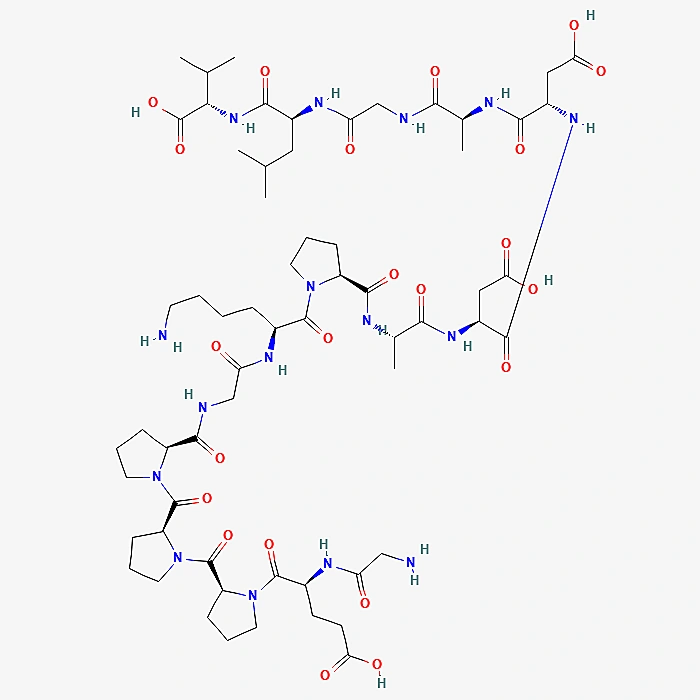 BPC-1571420 g/mol
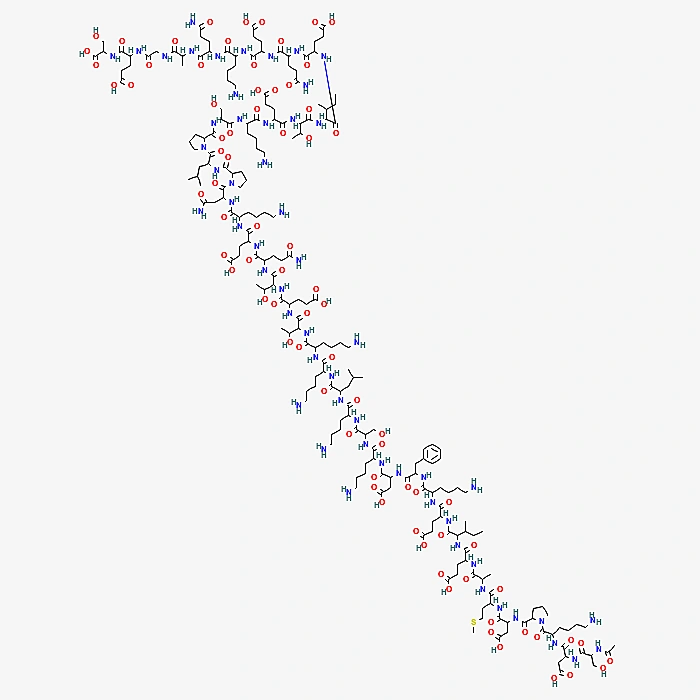 TB-5004964 g/mol
Molecular data
- Compound name
- Wolverine (BPC-157 + TB-500)
- Also referenced as
- BPC-157 + TB-500
- Research classification
- Peptide Blend
- BPC-157 average mass
- 1420 g/mol (calculated from molecular formula)
- TB-500 average mass
- 4964 g/mol (calculated from molecular formula)
- Research pathway
- Tissue Signaling
- Physical form
- Co-lyophilized blend
- Storage & handling
- Store lyophilized at -20°C. Protect from light.
- Available presentations
- 10mg · 20mg
- Current status
- In Stock
Fields with no verifiable source are omitted rather than estimated. Where an average mass is marked as calculated, it is derived arithmetically from the molecular formula using IUPAC standard atomic weights, not measured.
Documented assay contexts
Contexts in which this compound is used as a reference material in published in-vitro work. These describe laboratory usage, not effects in any organism.
- Comparative tissue-repair signaling models
- Fibroblast migration and ECM endpoints
Lot documentation
| Lot | Presentation | Purity | Certificate |
|---|---|---|---|
| PH260401 | 20mg | 99.9% | View certificate |
| PH260402 | 10mg | 99.8% | View certificate |